
Michael Litt (CEO, Vidyard) and Guillaume Jacquet (CEO, Vasco) point to a structural change that goes far beyond features or workflows: AI is breaking the economic assumptions SaaS has relied on since the rise of the cloud. For RevOps teams, the impact is immediate. Pricing, forecasting, and planning models built for predictable recurring revenue are starting to crack.
AI reintroduces real marginal costs into software
Traditional SaaS was built on a powerful assumption: once software is shipped, serving one more customer costs almost nothing. That assumption enabled unlimited usage plans, stable margins, and clean recurring revenue models.
AI changes that equation.
Running AI systems comes with real, variable costs: tokens, compute, energy, storage, latency. These costs scale with usage, not licenses or seats. And many frontier models are still subsidizing their true operating costs, meaning today’s prices likely understate the real economics and may rise before efficiencies bring them down.
Michael Litt explains why this breaks traditional pricing logic:
“If you charge someone $20 a month for software, but their AI usage generates massive token consumption, your compute bill can exceed the revenue they’re paying you.”
At Vidyard, this is not theoretical. Litt shared an example of a customer generating 200,000 AI-powered videos per month using avatar technology. Under a traditional subscription model, that customer would quickly become unprofitable.
“If they were just uploading regular videos, that’s fine. But when they generate AI Avatars at massive scale, the compute costs explode. We have to charge based on usage or outcomes to protect our margins.”
This is why Litt summarizes the shift with a now widely echoed idea: “RaaS is the new SaaS." Results-as-a-Service replaces Software-as-a-Service, and customers pay for outcomes delivered, not for access to software.
From recurring revenue to re-occurring revenue
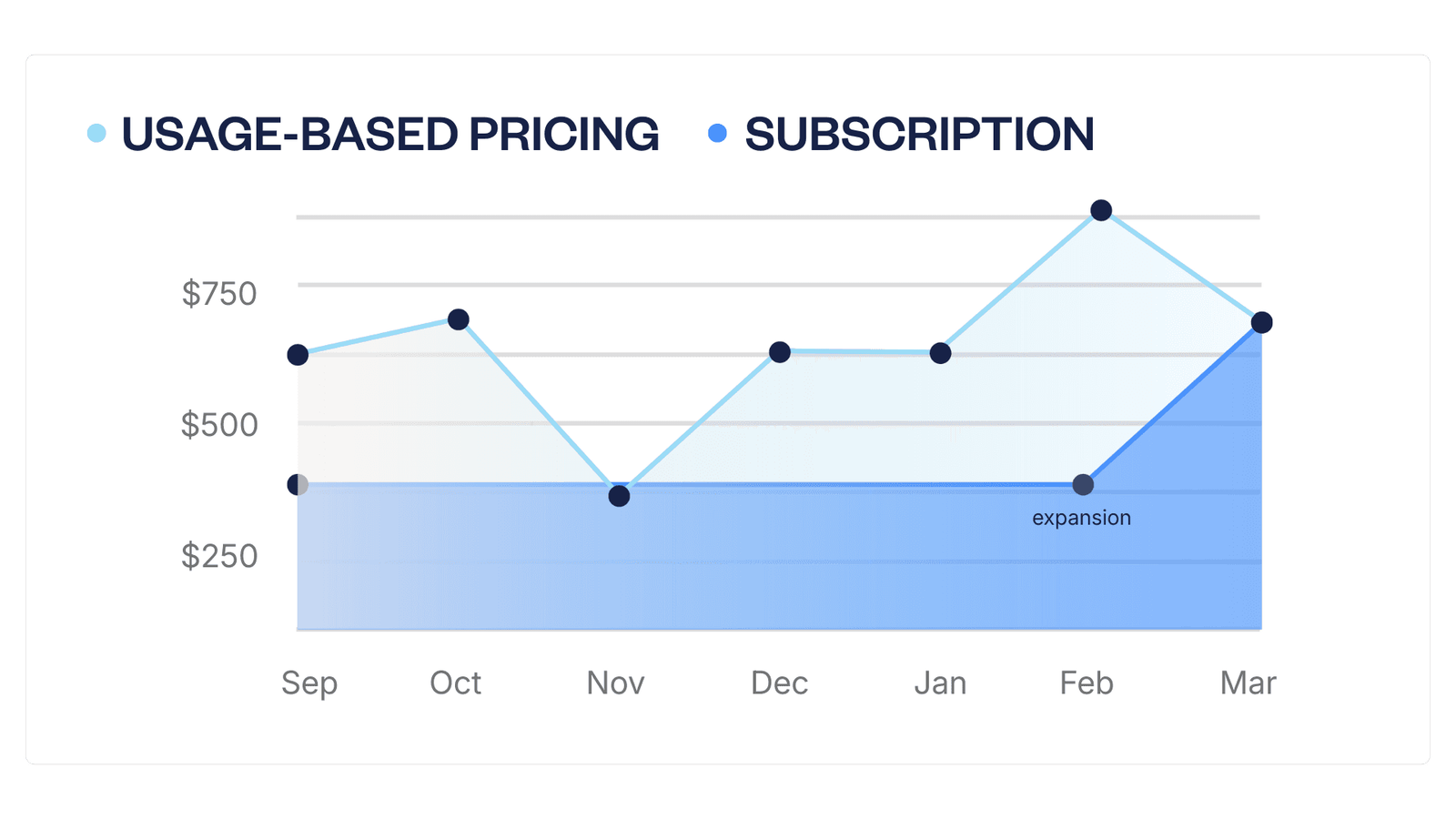
Usage-based pricing doesn’t eliminate recurrence, but it fundamentally alters its shape.
Classic SaaS models rely on contracts, fixed ACV, and relatively smooth month-to-month revenue. In contrast, usage-based revenue expands and contracts based on adoption, seasonality, and actual consumption.
As Guillaume Jacquet puts it:
“Expansion changes meaning. Investors used to value recurring revenue. Now it’s often re-occurring revenue, and it doesn’t behave the same way.”
Revenue still comes back, but not on a perfectly predictable schedule. It fluctuates with usage, markets, and customer behavior. That volatility challenges long-standing assumptions embedded in forecasting, board reporting, and valuation models.
Why companies are landing on hybrid pricing models
Despite the momentum behind usage-based pricing, many companies are still hesitant to make a clean break from subscriptions.
In practice, we’re seeing many hybrid models emerge. These typically combine:
- A base subscription fee for access and predictability
- Usage-based components tied to consumption, tokens, or outcomes
According to Guillaume Jacquet, this is often a pragmatic transition phase:
“What we see today are mostly hybrid models. Companies keep a subscription layer, but package usage inside it — for example by selling bundles of tokens — to preserve some predictability while aligning costs with consumption.”
These hybrids reflect a reality: fully variable revenue is still uncomfortable for many operators, customers, and investors. But they also signal that unlimited usage for a flat fee is no longer sustainable in an AI-driven world.
Why usage-based pricing breaks traditional RevOps planning
This is where RevOps feels the disruption most directly.
Legacy RevOps models assume:
- Revenue is predictable (the same amount is recognized month after month for a given customer)
- CRM approximates revenue reality
- Forecasting is driven by pipeline and bookings
Usage-based pricing breaks all three.
When adoption determines revenue, missing usage targets means missing the plan entirely. ACV is no longer fully known at close. Forecasting becomes probabilistic rather than deterministic.
As Michael Litt notes:
“If adoption is how you get paid, and adoption doesn’t happen, you don’t just miss expansion — you miss the plan.”
RevOps teams are forced to rethink how they forecast, plan capacity, and design compensation in a world where revenue follows usage, not signatures.
When CRM, billing, and analytics stop lining up
In traditional SaaS, CRM was a reasonable proxy for revenue. Usage-based models fundamentally break that assumption.
Guillaume Jacquet explains why this creates a structural problem:
“In a usage-based world, ACV can swing massively based on consumption. The systems that actually know how customers consume value are billing engines and product analytics, not CRM.”
As a result, teams are increasingly moving their source of truth away from the CRM and toward the data warehouse — the only place where product usage, billing, and financial data can converge.
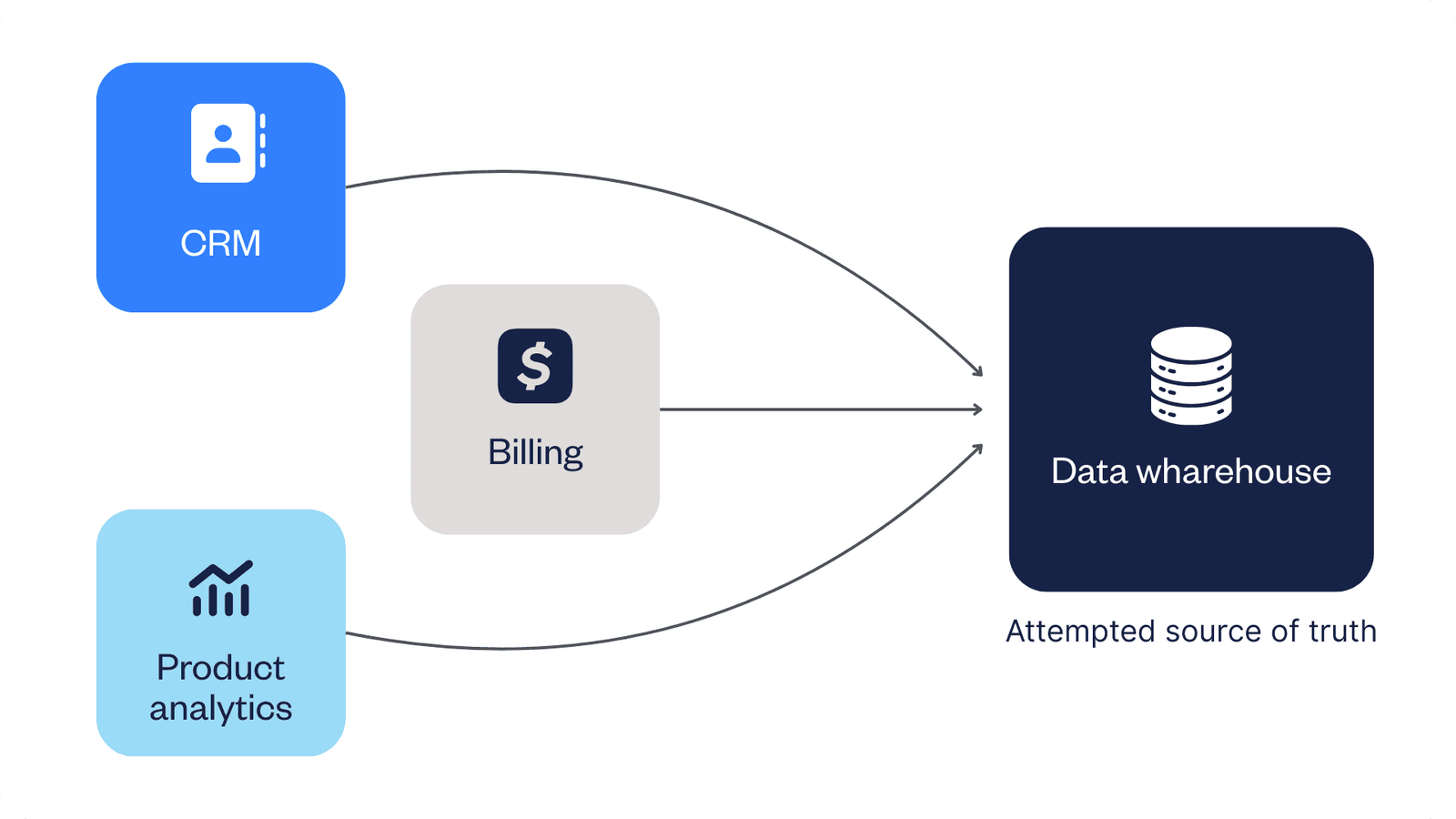
This shift, however, introduces significant technical complexity. RevOps teams are forced to rebuild revenue logic from fragmented systems, manage brittle pipelines, and maintain custom models just to answer fundamental questions about growth and performance.
As Jacquet sums it up:
“RevOps ends up stitching everything back together, and that’s incredibly complex.”
The end of cheap scale, not the end of SaaS
AI doesn’t kill SaaS. But it does mark the end of cheap, thoughtless scale.
The economics of AI force companies to align value, cost, and revenue far more tightly than before. That pressure cascades through pricing models, forecasting logic, and RevOps design.
Most companies haven’t fully transitioned to usage-based pricing yet. But the ones making progress are those taking the shift seriously early, experimenting with hybrid models, and rethinking how RevOps supports growth when revenue follows consumption and outcomes rather than contracts.